Discover Wisbech

A town of extraordinary heritage - Georgian streets, pioneering people, and a history that shaped Britain.

The Capital of the Fens

Wisbech is one of the oldest towns in the Fenland region of Cambridgeshire. Situated where the River Nene meets the flat expanses of the Fens, it developed as a significant port and market town from at least the early medieval period.

During the seventeenth and eighteenth centuries, the drainage of the Fens transformed the agricultural landscape, and Wisbech - already well-placed on the Nene - flourished as a prosperous trading town. The wealth generated from this period is written in stone along North Brink and Museum Square, where some of England's finest Georgian townhouses still stand.

By the nineteenth century, Wisbech had produced two of Britain's most significant social reformers: Thomas Clarkson, whose tireless campaigning contributed directly to the abolition of the British slave trade, and Octavia Hill, co-founder of the National Trust.

c.656 AD
Saxon Origins

Wisbech is first recorded in documents associated with the Abbey of Ely. The name likely derives from Old English, meaning something close to "the back of the River Wissey." Read more

1086
Domesday Book

William the Conqueror's survey records Wisbech with 73 households, 30 ploughlands, a castle, a mill, and a value of Β£12 - held by the Abbot of Ely. Read more

1630s
Fenland Drainage

Dutch engineer Cornelius Vermuyden leads drainage projects that transform the flooded Fenland into productive agricultural land, reshaping Wisbech's fortunes as a market town. Read more

18th Century
Georgian Prosperity

Wisbech flourishes as a port and market town. The magnificent Georgian streetscapes of North Brink and Museum Square are built during this period. Read more

1722
Peckover House

The house now known as Peckover House is built on North Brink, later acquired by the Peckover family - Quaker bankers whose influence shaped the town. Read more

1760
Thomas Clarkson Born

Thomas Clarkson, future abolitionist and campaigner, is born in Wisbech on 28 March 1760. His work would contribute directly to the Slave Trade Act of 1807. Read more

1793
Angles Theatre Opens

The Angles Theatre is built on Alexandra Road, one of the oldest purpose-built theatres in England. Still staging a full programme today.

1795
Elgood's Brewery

North Brink Brewery is established on North Brink. Taken over by the Elgood family in 1878, it remains one of England's last family-owned Georgian breweries. Read more

1807
Abolition of the Slave Trade

The Slave Trade Act passes, in large part through the campaigning of Wisbech-born Thomas Clarkson alongside William Wilberforce. Read more

1835
Wisbech Museum Founded

The Wisbech Museum Society is established - one of the earliest provincial museum societies in England - moving to its purpose-built Victorian building in 1847.

1838
Octavia Hill Born

Octavia Hill, future co-founder of the National Trust, is born in Wisbech on 3 December 1838. Read more

1868
Dickens Manuscript Bequeathed

The original manuscript of Great Expectations is bequeathed to Wisbech Museum by the Revd Chauncy Hare Townshend, a friend of Dickens. Read more

1921
Food Canning Industry

Smedley's opens one of England's first major canning factories in Wisbech, pioneering the industrial preservation of peas and soft fruits. Read more

1948
Peckover to the Nation

Peckover House and its extraordinary walled garden are given to the National Trust, ensuring their preservation for future generations. Read more
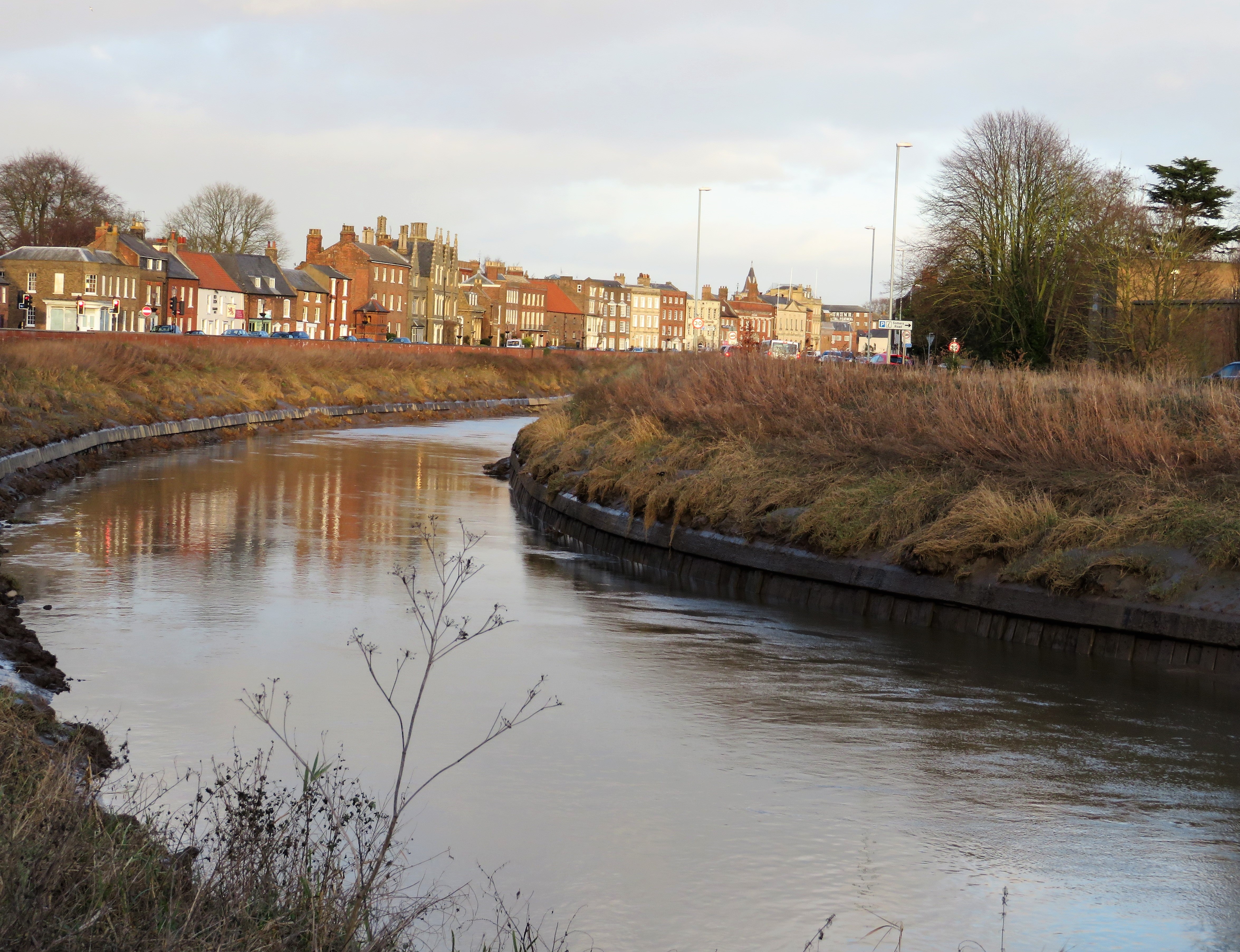
North Brink, Wisbech

North Brink

Nikolaus Pevsner described North Brink as "one of the most perfect Georgian streets in England." Running along the north bank of the River Nene, the street is lined with elegant townhouses from the late eighteenth and early nineteenth centuries - a remarkably intact Georgian streetscape.

πŸ—ΊοΈ
Planning a visit? The Tourist Information Centre at 2–3 Bridge Street is open Monday–Friday 9am–4pm, Saturday 9am–12pm. Call 01945 232456.

Wisbech Landmarks

The town's most significant buildings, streets, and sites of historical interest.

🌿

Peckover House & Garden

National Trust Β· North Brink, PE13 1JR

A Georgian merchant's house built in 1722, later the home of the Peckover family - Quaker bankers of Wisbech. Its 2-acre Victorian walled garden is considered one of the finest in the country: two pool gardens, a fernery, double herbaceous borders, 60-plus rose varieties, a croquet lawn, and orange trees thought to be around 300 years old. Given to the National Trust in 1948.

πŸ“ North Brink, PE13 1JR 🌿 National Trust πŸ…ΏοΈ No on-site parking
National Trust Website β†’
πŸ›οΈ

Wisbech & Fenland Museum

Museum Square, PE13 1ES

Founded in 1835 and housed in a purpose-built Victorian building from 1847, this is one of the oldest purpose-built provincial museums in England. Its most celebrated holding is the original handwritten manuscript of Charles Dickens' Great Expectations, bequeathed to the museum in 1868 by the Reverend Chauncy Hare Townshend, an acquaintance of Dickens. The manuscript is kept in a safe and shown to visitors.

πŸ“ Museum Square, PE13 1ES πŸ•™ Wed–Sat 10am–4pm πŸ†“ Free entry
Museum Website β†’
🍺

Elgood's Brewery & Gardens

North Brink, Wisbech

The North Brink Brewery was established in 1795 and came under the ownership of the Elgood family in 1878. Now one of the few remaining family-owned Georgian breweries still operating in England. The 4-acre grounds include specimen trees, herbaceous borders, a lake, rockery, water features, an exotic house, and a herb garden. Brewery tours and beer tastings are available; the gardens are open seasonally.

πŸ“ North Brink, Wisbech 🍺 Tours available 🌸 Gardens seasonal
Elgood's Website β†’
🏠

Octavia Hill Birthplace Museum

South Brink, Wisbech

The birthplace of Octavia Hill (1838–1912), social reformer, housing pioneer, and co-founder of the National Trust. Hill's work transformed the lives of thousands of working-class families in Victorian London and her vision - that ordinary people should have access to nature and open space - led directly to the founding of the National Trust in 1895.

πŸ“ South Brink, Wisbech πŸ•™ Check for seasonal opening
πŸ—Ώ

Clarkson Memorial

Bridge Street, Wisbech

A striking monument to Thomas Clarkson (1760–1846), born in Wisbech, who played a central role in the abolition of the British slave trade. As an undergraduate at Cambridge, Clarkson won a prize essay arguing against slavery - and spent the rest of his life campaigning to end it. The Slave Trade Act of 1807 owed much to his tireless work. The memorial stands on Bridge Street in the town centre.

πŸ“ Bridge Street, Wisbech πŸ†“ Free to visit
β›ͺ

St Peter & St Paul's Church

Church Terrace, Wisbech

The parish church of Wisbech, with a distinctive tower visible across the surrounding fenland. The church has medieval origins and contains monuments and memorials spanning many centuries of local history. Thomas Clarkson is buried in the churchyard. The church is open to visitors and holds regular services.

πŸ“ Church Terrace, Wisbech πŸ†“ Free to visit πŸ•™ Check for opening times

Notable People

Wisbech has produced some extraordinary individuals who shaped Britain and the world.

πŸ‘©

Octavia Hill

Born Wisbech, 3 December 1838 Β· Died 13 August 1912

Social reformer, housing campaigner, and co-founder of the National Trust. Octavia Hill dedicated her life to improving the living conditions of working-class families in Victorian London, pioneering housing management approaches still influential today. She believed passionately that ordinary people needed access to green spaces and fresh air - a conviction that led her, alongside Robert Hunter and Canon Hardwicke Rawnsley, to found the National Trust in 1895.

The National Trust today protects over 780 miles of coastline and hundreds of thousands of hectares of countryside in England, Wales, and Northern Ireland. That heritage began with a woman born on South Brink, Wisbech.

Octavia Hill Birthplace Museum
⛓️

Thomas Clarkson

Born Wisbech, 28 March 1760 Β· Died 26 September 1846

Abolitionist, essayist, and one of the most important figures in the movement to end the British slave trade. Clarkson was born the son of the headmaster of Wisbech Grammar School. As a student at St John's College, Cambridge, he won a Latin essay prize on the theme of whether it was lawful to make slaves of others against their will - and the research he undertook changed the course of his life and of history.

Clarkson spent decades gathering evidence of the brutality of the slave trade, interviewing sailors, gathering artefacts, and building the case that brought Wilberforce, the Prime Minister, and Parliament to act. The Slave Trade Act of 1807 outlawed the British trade in enslaved people. Clarkson lived to see full emancipation in 1833. He is buried in St Peter and St Paul's churchyard in Wisbech.